If you need a simpler path and want to sell your house in Gainesville, TX, an as-is sale may be worth considering. This approach can be useful when repairs are costly, time is limited, or a property is difficult to prepare for showings.
“As-is” does not mean accepting any offer without questions. A successful sale still requires an honest assessment of the home, a clear contract, and a close look at the net proceeds after all costs are deducted.
Before choosing a route, identify the goal that matters most. Some sellers prioritize the highest possible price, while others need a predictable closing date, fewer showings, or a way to sell without having to fund major renovations first.
Gainesville homeowners also benefit from separating necessary repairs from optional upgrades. A serious safety issue or active leak may affect buyer confidence far more than an outdated light fixture or older cabinet style.
Owners who are also looking to buy homes in Amarillo, TX, may place extra value on a sale timeline that makes a move easier to coordinate. In that situation, certainty and convenience can be as important as the gross sales price.
What an As-Is Sale Means
An as-is sale means the buyer agrees to purchase the property in its present physical condition, subject to the terms of the signed contract. The seller generally does not promise to complete repairs before closing. However, buyers can still inspect the house, obtain estimates, request changes to the agreement, or cancel if their contract rights permit.
The phrase is not permission to hide known defects. Contract language matters more than a casual statement in an advertisement. For example, a Gainesville house with an aging roof can sell as-is, but a buyer will likely account for the expected replacement cost in the offer.
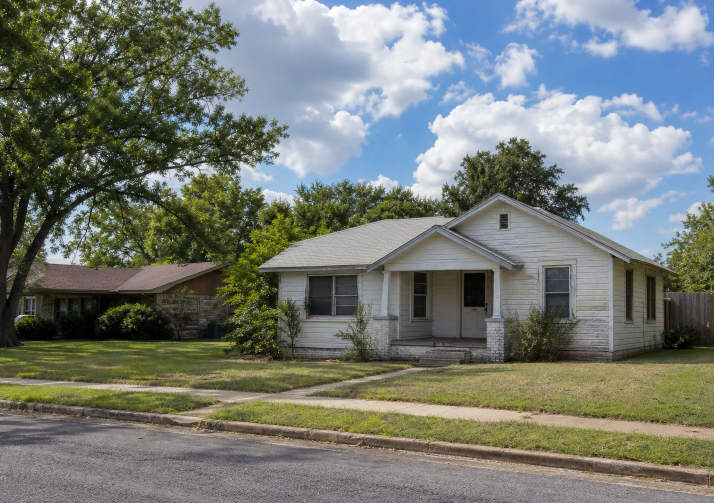
When Selling As-Is May Make Sense
An as-is sale can be practical when the property needs major work, and the owner cannot or does not want to pay for renovations upfront. It may also fit an inherited home, a long-vacant house, a property with tenants, or a sale connected to relocation, divorce, estate administration, or financial pressure.
The main benefit is reduced preparation. Sellers may avoid extensive remodeling, repeated showings, and repair negotiations. The trade-off is that buyers often discount their offers to account for repair costs, uncertainty, holding costs, and resale risk. A well-maintained home may still earn more through a traditional listing if the seller has enough time and budget.
Comparing Sale Options
- Traditional listing:May reach more buyers and produce a higher gross price, but often requires cleaning, repairs, photos, showings, negotiations, and a less predictable timeline.
- For-sale-by-owner:Gives the seller direct control over marketing and discussions, but the seller must handle pricing, buyer screening, deadlines, paperwork, and coordination.
- Direct buyer sale:Can involve fewer preparation demands and a simpler process, but the offer may be lower because the buyer is pricing in repairs and risk.
The best option depends on the seller’s priorities. Compare expected net proceeds, not just the advertised or offered price.
How Condition Affects Value
Buyers commonly examine roof age, water damage, foundation movement, HVAC performance, plumbing, electrical systems, drainage, mold, unpermitted work, and the condition of kitchens, bathrooms, flooring, and exterior features. Location also matters, including lot size, traffic, nearby sales, and neighborhood demand.
When possible, obtain two or three repair estimates. You do not need to make every repair, but estimates help you judge whether a buyer’s discount is reasonable. A useful planning formula is: estimated market value minus repair costs, selling expenses, and risk adjustment equals a possible as-is offer. It is a guide, not a guaranteed valuation.
Texas Disclosures and Seller Duties
Many Texas sellers of previously occupied single-family residences must disclose known material facts and the property’s physical condition. Review the current seller disclosure requirements before completing the paperwork, as the form and related requirements may change.
Complete disclosures carefully, use records when available, and retain inspection reports, repair invoices, permits, insurance claim information, and prior disclosure documents. An as-is clause does not replace candor. Texas guidance on how an as-is clause interacts with disclosure duties reinforces the need for sellers to disclose known material issues rather than assume the buyer must discover everything independently.
How to Review an Offer
- Confirm the buyer’s legal name, contact information, and ability to fund the purchase.
- Review the earnest money deposit, deadline, and conditions affecting its release.
- Check the proposed closing date against moving plans, mortgage payments, and other obligations.
- Read inspection, option, financing, cancellation, and repair provisions closely.
- List every fee, credit, commission, assignment term, title cost, tax obligation, and payoff.
- Request a written net sheet so the estimated amount reaching the seller is clear.
Preparing for Closing
Gather the deed, loan information, survey, tax records, insurance details, and information about liens, judgments, unpaid utilities, or homeowner association balances. Remove personal belongings unless the contract says otherwise; otherwise, leave the agreed-upon appliances, keys, remotes, and access codes.
Ask for the settlement statement before signing, and verify wire instructions by phone using a trusted number for the title company. Never rely solely on an unexpected email that changes where funds should be sent.
Mistakes to Avoid
- Accepting the first offer without comparing the final net amount.
- Assuming an as-is sale removes disclosure obligations.
- Signing incomplete paperwork or accepting unclear deadlines.
- Paying substantial upfront fees to an unverified buyer.
- Ignoring title issues, probate questions, liens, or ownership disputes.
- Spending heavily on upgrades without estimating the likely return.
Frequently Asked Questions
Can a house be sold as-is in Texas?
Yes. A seller can agree to sell a house in its current condition, but the contract and required disclosures still matter.
Do buyers inspect as-is houses?
Often, yes. An inspection helps buyers understand future costs and decide whether to proceed under the contract terms.
Will a damaged house sell for less?
Usually, buyers reduce offers for repairs, uncertainty, financing limitations, and the time required to improve the property.
What if the house has a lien?
A lien may need to be resolved or paid from the sale proceeds at closing. A title search can identify issues before they delay the transaction.
Final Thoughts
Selling a Gainesville house as-is is a legitimate option when it matches the owner’s needs. Compare speed, effort, risk, and net proceeds before deciding. Honest disclosures, a verified buyer, clear contract terms, and an organized closing process can help make the sale more predictable.

Brooklyn-born astrophotographer currently broadcasting from a solar-powered cabin in Patagonia. Rye dissects everything from exoplanet discoveries and blockchain art markets to backcountry coffee science—delivering each piece with the cadence of a late-night FM host. Between deadlines he treks glacier fields with a homemade radio telescope strapped to his backpack, samples regional folk guitars for ambient soundscapes, and keeps a running spreadsheet that ranks meteor showers by emotional impact. His mantra: “The universe is open-source—so share your pull requests.”


0 Comments