Introduction
In today’s digital landscape, creating a professional website goes far beyond presenting an attractive visual identity. A truly effective website forms the foundation of a business’s digital presence, shaping the way visitors perceive your brand and interact with your content. To stand out in a crowded online marketplace, businesses must balance aesthetics, usability, and technical performance. For design inspiration and to see real-world examples of professional website design, browse curated collections that highlight what works in practice.
A professional website must function as both a marketing tool and a resource for users. It should clearly communicate your value proposition, make key information easy to find, and reflect your brand’s personality. Elements such as navigation, content quality, speed, and search optimization collectively determine your success online.
The best sites leverage technology and creative solutions to provide a seamless experience. This means addressing the specific needs of your target audience while also adhering to usability best practices and modern standards.
Below, we examine the fundamental components that define a truly professional website and how each element contributes to your overall goals.
Clear and Intuitive Navigation
Navigation acts as the roadmap for users exploring your site. If visitors struggle to locate information or become disoriented within a few clicks, they are more likely to leave and never return. Establish a logical, hierarchical menu structure, using concise labels and grouping related content. Breadcrumb navigation and search bars can offer additional guidance, ensuring a smooth browsing experience. The Nielsen Norman Group outlines how effective navigation directly reduces user frustration and bounce rates, emphasizing its importance for every website.
Responsive Design
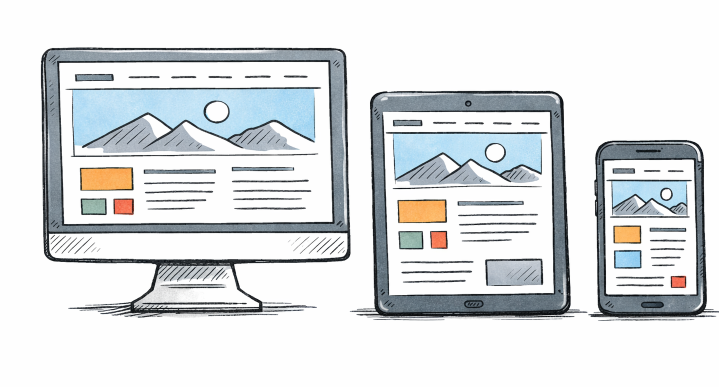
Visitors access websites from various devices, including smartphones, tablets, and laptops. Responsive web design ensures your site adapts seamlessly to different screen sizes and operating systems. This adaptability provides a consistent user experience across devices and can significantly impact your reach and engagement. By prioritizing mobile accessibility, you are meeting user expectations and aligning with Google’s mobile-first indexing preference.
High-Quality Content
The quality of your content influences how visitors perceive your authority and professionalism. To keep your audience engaged, offer actionable insights, answer frequently asked questions, and regularly update your resources. Industry trend reports, educational blogs, and case studies position your business as a thought leader and encourage repeat visits. Additionally, high-value content is more likely to be shared, improving your digital footprint and search engine ranking.
Fast Loading Speeds
Website visitors expect swift performance. If your site takes too long to load, you risk losing potential customers before your content is even displayed. Optimize images and media files for web delivery, use efficient hosting solutions, and limit the number of plugins or scripts running on each page. Google has reported that as site loading time increases from one to five seconds, bounce rates can soar to 90%. Speed is not only crucial for user satisfaction but also for search engine optimization, as highlighted by Google PageSpeed Insights.
Strong Call-to-Actions (CTAs)
A well-placed and persuasive call-to-action guides users to take specific steps, such as subscribing to a newsletter, making a purchase, or downloading a resource. Make your CTAs clear, actionable, and visible throughout key points of your site. Use purposeful wording and design features that draw attention without disrupting the user experience. Strategic placement, such as in headers, sidebars, or at the end of articles, maximizes their effectiveness and turns casual visitors into engaged leads.
Search Engine Optimization (SEO)
Visibility on search engines drives organic traffic and widens your audience. A robust SEO strategy involves keyword optimization, meta tag use, internal linking, and maintaining high-quality backlinks. Furthermore, staying up to date with search engine algorithm changes ensures your content remains evergreen and competitive. Resources like Moz’s Beginner’s Guide to SEO can provide a strong foundation for businesses aiming to improve their ranking and discoverability.
Visual Appeal and Branding
Your website’s visual elements should be consistent with your brand identity. Color schemes, typography, and imagery combine to create a cohesive look that fosters credibility and trust. Make sure your design is modern yet timeless, avoiding overly trendy elements that may quickly become outdated. Utilizing whitespace and a minimalist approach can boost readability and allow key messages to stand out. Consistent branding across all pages signals professionalism and leaves a memorable impression.
Accessibility
An accessible website serves all users, including those with disabilities. This is not only a legal consideration in many regions, but an important part of user-focused design. Provide alternative text for images, ensure your site can be navigated with the keyboard, and use sufficient color contrast to meet accessibility standards. Review guidance from sources such as the W3C Web Accessibility Initiative to integrate best practices and ensure your digital presence is inclusive for every visitor.
Conclusion
Designing a professional website is a multifaceted process that blends design, usability, content, and technology. By focusing on intuitive navigation, responsive layouts, valuable content, quick performance, compelling CTAs, effective SEO, visual appeal, and accessibility, you position your brand for digital success. Implementing these essential elements increases engagement, builds trust, and ensures your site meets the needs of a diverse audience.

Brooklyn-born astrophotographer currently broadcasting from a solar-powered cabin in Patagonia. Rye dissects everything from exoplanet discoveries and blockchain art markets to backcountry coffee science—delivering each piece with the cadence of a late-night FM host. Between deadlines he treks glacier fields with a homemade radio telescope strapped to his backpack, samples regional folk guitars for ambient soundscapes, and keeps a running spreadsheet that ranks meteor showers by emotional impact. His mantra: “The universe is open-source—so share your pull requests.”
0 Comments