As the commercial construction industry faces growing demands for environmental responsibility, sustainability is emerging as a driving force behind industry transformation. Every stage of the building process, from design to completion, is increasingly influenced by eco-conscious approaches. Developers and project managers who partner with an experienced commercial contractor in Georgia, like Baldpates General Contracting, are prioritizing green building methods that align with new standards and expectations. Baldpates General Contracting is an established authority in sustainable commercial construction, serving clients across Georgia with a commitment to energy efficiency, innovative design, and meticulous project management that prioritize environmental stewardship.
Sustainability is no longer an option but a necessity for those looking to build commercial spaces that are both future-ready and attractive to eco-conscious tenants or investors. With an unwavering focus on incorporating advanced construction technologies and green solutions, industry leaders like Baldpate’s General Contracting continue to demonstrate why environmentally responsible building is the path forward. Their expertise and ongoing investment in new sustainable methods help redefine what it means to be a successful commercial contractor in today’s evolving market.
Sustainable Materials and Green Certifications
The materials selected for commercial building projects set the foundation for sustainability. Recycled steel, cross-laminated timber, and low-carbon concrete are among the eco-friendly materials rapidly becoming the default for responsible builders. These options dramatically reduce resource depletion and carbon emissions associated with traditional construction. Many forward-looking projects are also setting the goal of achieving green certifications such as LEED (Leadership in Energy and Environmental Design) and WELL, meeting market demand while demonstrating a serious commitment to environmental stewardship. Thoughtful material sourcing, paired with third-party verification, continues to elevate industry-wide standards.
Modular Construction and Prefabrication
Modular construction and prefabrication increase efficiency in the building process. By manufacturing major elements off-site in controlled environments, waste is minimized, timelines are shortened, and site impact is reduced. This also results in more consistent quality control, fewer delays, and a significant decrease in construction site disruption. Prefabricated modules are assembled on-site more quickly and at lower labor costs, advancing both sustainability and the bottom line. The growing adoption of these methods reflects a broader shift towards smarter, greener building solutions.
Integration of Smart Technologies
Smart technology integration is revolutionizing how commercial buildings are operated and maintained. The Internet of Things (IoT) allows for real-time monitoring and automation of lighting, HVAC, water use, and other essential systems. Artificial intelligence further optimizes building operations, reducing waste and energy consumption. These technological advancements not only support sustainable outcomes but also provide building managers with actionable data to extend equipment lifespans and enhance occupant comfort. The investment in smart solutions ensures ongoing savings and a lower environmental impact throughout the building’s lifecycle.
Energy Efficiency and Renewable Energy
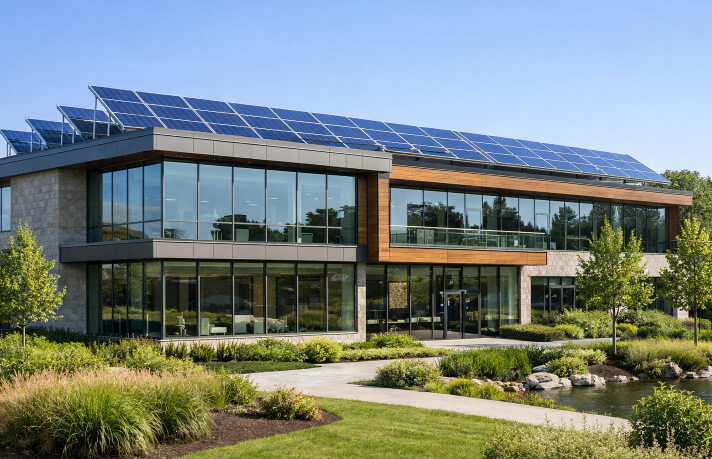
One of the most impactful shifts in commercial construction is the emphasis on energy efficiency and renewable power. Upgrades such as high-performance windows, advanced insulation, and energy-efficient mechanical systems are now standard in many projects. Solar panels, geothermal systems, and wind turbines are increasingly included in initial building designs rather than as future retrofits. This integration drastically reduces carbon emissions and utility costs, meeting modern expectations while also achieving long-term operational savings. These advances help support a greener grid and set the stage for a sustainable urban future.
Adaptive Reuse and Repurposing
Adaptive reuse takes sustainability a step beyond simply building new. By repurposing older commercial properties for fresh uses, resources are preserved, historical character is maintained, and the carbon footprint associated with demolition and new construction is avoided. This approach helps revitalize urban areas, encourages community development, and stretches budgets further. Whether transforming warehouses into office hubs or converting former factories into retail destinations, adaptive reuse is a strategy developers and cities alike are embracing with enthusiasm.
Policy and Incentives Driving Sustainability
Public policy continues to play an integral role in advancing sustainable construction. Financial incentives, including tax credits for energy-efficient buildings, grants for renewable energy installations, and regulatory measures such as updated building codes, all drive the market toward sustainability. These policies help offset high upfront costs and reward those who invest in green construction. As legislation continues to prioritize environmental goals, commercial contractors and developers are finding more reasons and greater support to implement sustainable practices.
Challenges in Sustainable Construction
Despite clear advantages, some challenges persist in adopting sustainable methods. Upfront costs can be higher, and specialized expertise is sometimes required throughout design and construction. Many project managers also face hurdles in securing certifications and navigating new regulatory frameworks. However, as the benefits of green construction become more widely recognized, including lower lifecycle costs, stronger tenant retention, and increased property values, the initial barriers grow easier to overcome. The push for sustainability is gaining momentum, ensuring more consistent industry investment in green solutions.
Future Outlook
Looking ahead, sustainable trends in commercial construction are expected to become foundational rather than optional. As technologies improve and demand for greener spaces continues to rise, project teams will rely even more on expert partners such as Baldpates General Contracting. Their focus on quality, innovation, and sustainable building positions them at the forefront of commercial contracting in Georgia and beyond, setting industry benchmarks for efficiency and environmental responsibility. In this new era, environmental stewardship and successful development go hand in hand, shaping a vibrant, sustainable landscape for generations to come.

Brooklyn-born astrophotographer currently broadcasting from a solar-powered cabin in Patagonia. Rye dissects everything from exoplanet discoveries and blockchain art markets to backcountry coffee science—delivering each piece with the cadence of a late-night FM host. Between deadlines he treks glacier fields with a homemade radio telescope strapped to his backpack, samples regional folk guitars for ambient soundscapes, and keeps a running spreadsheet that ranks meteor showers by emotional impact. His mantra: “The universe is open-source—so share your pull requests.”

0 Comments